

My musings generally revolve around John Fitzalan, 7th Earl of Arundel, and his story, but occasionally other interesting people, places or events linked to medieval times will find a place here
Lady of the Manor's Medieval Christmas
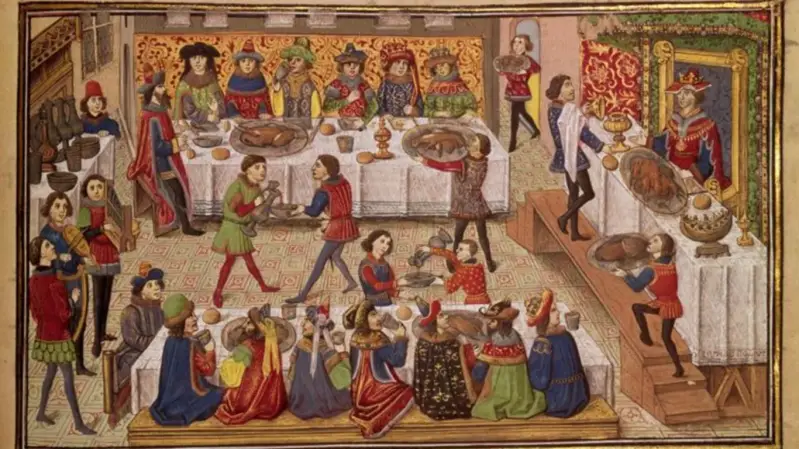
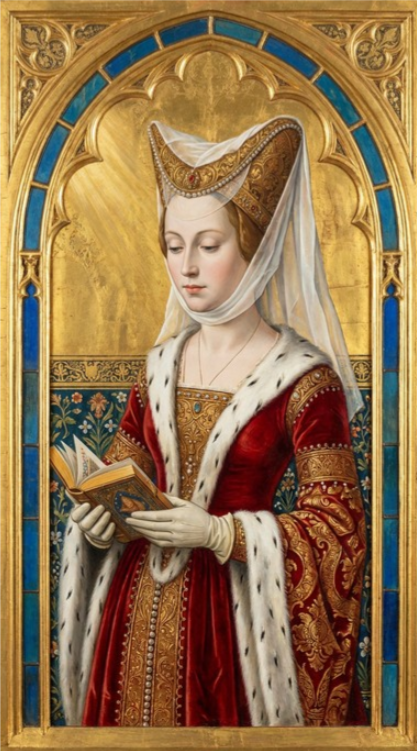
Christmas arrives in the shops earlier every year, ‘To Do’ lists grow longer as the days grow shorter, and social media present images of perfection that seem unattainable to most of us. If the thought of the coming festivities fills you with dread, spare a thought for the medieval Lady of the Manor, who was responsible for organising twelve exacting days of feasting and hospitality.

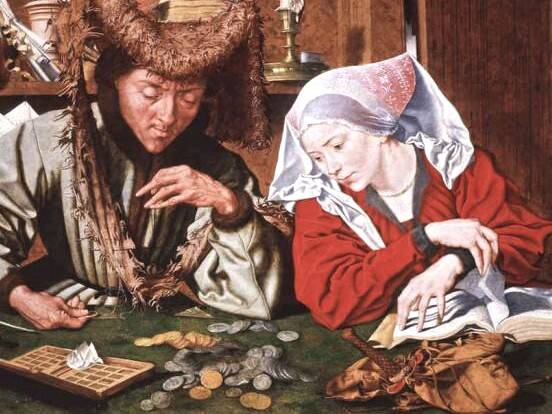
Her planning began In the autumn, selecting the best cuts of meat from the estate’s livestock and overseeing the salting and smoking processes. The storerooms were filled with candles and firewood, and the buttery with barrels of wines and ales. A buyer or kitchen clerk sourced rare spices, used in rich dishes and hippocras wine to impress guests with the family’s wealth. These spices – black pepper, cinnamon, ginger, cloves, nutmeg, and saffron – were incredibly expensive, and were kept in a locked chest in the Lady’s chamber or in a dedicated Spicery.
Although household officials decided on menus and were responsible for obtaining sufficient supplies, the Lady’s job was to oversee accounts and prevent pilfering. Every item purchased was entered in an account roll, and she noted not only what was used, but who dined at the estate each day. She recorded which prestigious guests were invited to a Christmas feast, the amount of grain, meat, or salt-fish taken from the stores and exactly how many gallons of ale and wine were consumed by lusty knights, to justify higher expenses.
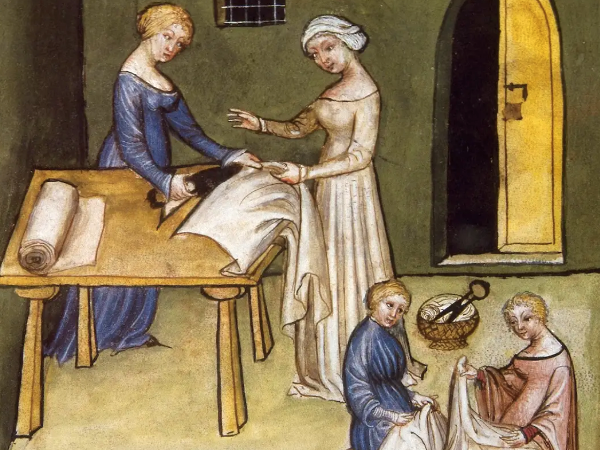
Travelling merchants arrived with perfumes, jewellery, and chests of luxurious fabrics. A tailor cut the cloth and basted the pieces together, then the Lady and her ladies-in-waiting sat together for hours in their private solar, hand-stitching seams together using tiny stitches. Intricate decorative borders embroidered with silk and gold thread were embellished with pearls and then warm linings and fur collars and cuffs were added not only to help the ladies survive the draughty halls, but as testament to the lord's wealth and the skill of his household's women.
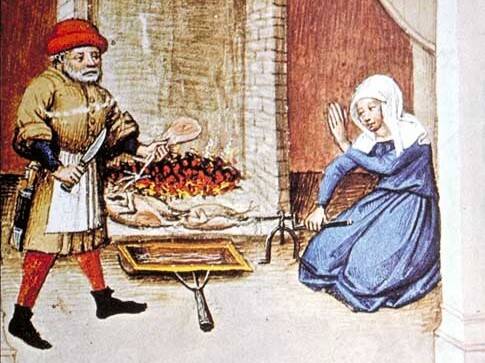
Although the Twelve Days of Christmas were a holiday for common labourers, it was the exact opposite for domestic servants. Stable boys, valets and pageboys, diary maids and young daughters of tenant farmers were drafted to scrub dishes, turn roasting spits and fetch water. The Lady would oversee the entire kitchen staff to make sure the elaborate feasts were perfectly presented, especially impressive dishes like roast swan or boar’s head, and delicate ‘subtleties’ of spun–sugar formed into intricate models, mainly designed to display the host’s immense wealth, sugar being an incredibly expensive luxury.

However, by far her most important role was to ensure there was no mistake with the seating hierarchy, as this would be seen as an insult to a guest’s honour, resulting in broken treaties, cancelled marriage plans and even violence if an affronted knight felt his status had been misrepresented. If this occurred, she would be judged incapable of managing the estate and worse, the family would be a laughing stock. During the feast she was constantly alert, always the diplomat, every gesture indicating her virtue and status. When the feasting was over, she was expected to act as a political broker and matchmaker for her household.
Apart from feasting, she had charitable duties to attend to, providing alms for tenants and preparing herbal remedies for the poor. There were also religious obligations demanding her participation, beginning with strict observation of Advent fasting, her piety necessary to allow feasting to take place. On Christmas Eve, she supervised the decking of the halls with holly, ivy, and rosemary, symbolising eternal life and also to ward off evil spirits. On Christmas Day itself, she led her family and servants in three solemn Masses, and then in celebrating the twelve saints’ days. Women were forbidden to spin thread during this time, and she had to enforce this rule, possibly her least onerous duty. Finally, on the Feast of Epiphany, the Lady attended a grand mass, marking the end of the festivities and the return to normal life.
So as I struggle with my menu planning and shopping lists, I am filled with admiration for the skill and fortitude of the Lady, and am thankful that my worst mistake could be sitting Granny at the wrong end of the table, or sneaking a mince pie before Advent is over.
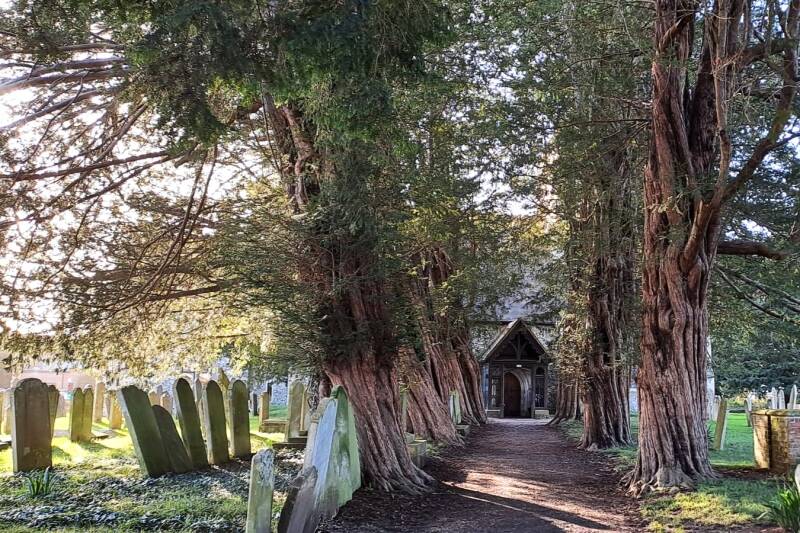
An ancient yew tree avenue
After the untimely death of John Fitzalan in 1435, his son, Humphrey, became 8th Earl of Arundel when he was only six years old. Sadly, he died only three years later and John’s youngest brother, William, became the 9th Earl.
Aside from his duties as a Royal Administrator, William managed extensive landholdings across Sussex. As Lord of the Manor for Westbourne, although he was not legally responsible for the buildings of St John the Baptist Church, he funded major renovations there from around 1485.
The ancient yew tree avenue is thought to have been planted at this time, and is considered one of the finest – and oldest – in Britain. But why yews, and why an avenue?
The tree has religious significance, the red sap and the white wood symbolising the body and blood of Christ. Pragmatically, it is also toxic, and prevented livestock from wandering into the churchyard.
The reasons for the planting of an avenue are much more theatrical. On holy days, the priest would lead a procession of the choir and congregation out of the church, around the churchyard and then re–enter the church through the dense corridor of yews. It was a dramatic ritual, a transition from everyday life to the mysterious reverence of the dim church.
Child betrothal and marriage in Medieval times
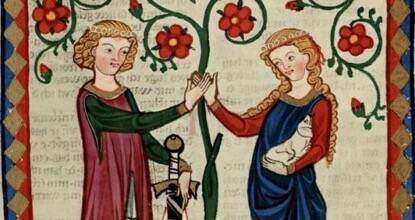
Medieval betrothal, marriage contracts, noble alliances, and the age at which people actually began living together as husband and wife are all wonderfully tangled subjects that play a major part in my telling of John Fitzalan’s life.
‘Requital’, although created by my imagination, is woven around factual evidence.
As a child, John was contracted to marry Constance, the daughter of John Cornwall, Baron Fanhope. The date of her birth is not accurately recorded, but is thought to have been between 1401 and 1405, making her anything from 3–7 years older than John.
The biological and psychological development of children in those days was actually slower than in our modern times, but they were taught adult responsibilities much earlier in life.
John was groomed from birth to fight a legal claim for the Arundel estates and title of Earl. It was his duty to regain the contested inheritance, and also to train for knighthood.
The daughter of a noble, like Constance, was a valuable commodity in the early 15th century. Her betrothal was negotiated to forge an advantageous alliance between two powerful families to gain political influence and a dowry of lands and riches.
The two children were not involved in any decisions about their futures, but had to accept the betrothal that was arranged by their respective fathers. A betrothal was more than just a promise to marry, it was a formal, legal contract, detailing the dowry the woman would bring to the marriage, and what provisions would be made for her, should she be widowed. To show consent, gifts known as a ‘wed’ were exchanged. This could be any token but was often a ring.
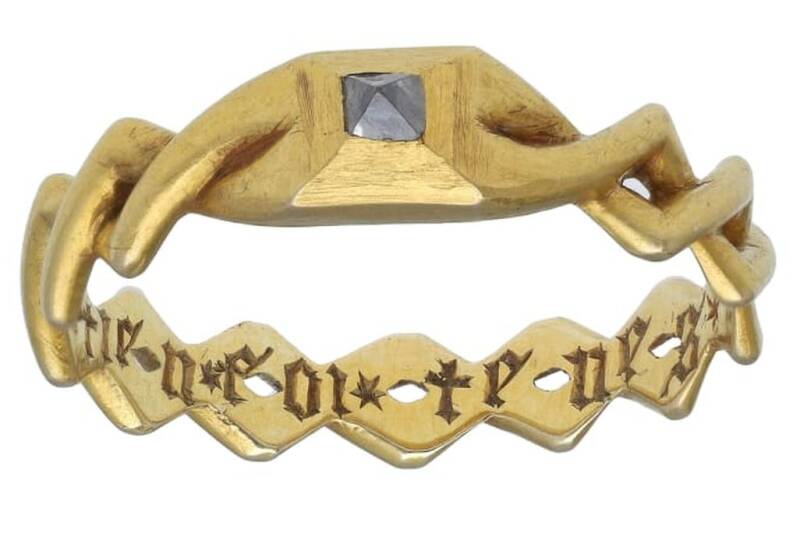
A detectorist unearthed a Medieval wedding ring in Dorset in 2022. Researchers at the British Museum believe it may have been given by Sir Thomas Brook, to his wife, Lady Joan, when they married in 1388. The two entwined bands symbolise the merging of two lives, and the inscription reads, ‘Ieo vos tien foi tenes le moy’ which translates as, ‘I hold your faith, hold mine.’
It is seen as a fine, rare example of courtly love.
The engagement was long, as the legal age for a marriage to take place was 14 years old for boys and 12 years old for a girl. During this time, it was common practice for the bride–to–be to live with her intended in–laws, to learn their ways and become settled into the family.
Given the uneven age gap, when Constance reached the age of twelve, John could have been anything from five to nine, so it is unlikely a marriage took place at that time. In fact, there is no record of their marriage ever having taken place, but that doesn't necessarily mean it didn't.
In the 12th century, the church decreed that marriage was a holy sacrament, the marriage representing the union of Christ and the church. It was not always required to have a marriage witnessed, as it was believed to have been sanctioned by God. Although it is possible that this was the case, it is not likely because John and Constance were from noble families. Such a marriage would be publicly witnessed and carefully recorded to ensure the legitimacy of heirs, and secure lands, wealth and dowries.
Another option: if a couple agreed to marry in the future and then consummated their relationship, this was seen as a physical expression of consent, and having sex created a legally binding marriage. If such a clandestine union had taken place, at a later date rival family members could lay claim to the family estates, so that is also unlikely.
Of course, it is possible that the marriage did take place and was recorded in a family document or parish register, which has since been lost or destroyed.
As there is no evidence, we are left with yet another mystery. Did they marry, or not? And if not, why not? It’s puzzles like these that make researching Medieval history so fascinating!
The effigy of John Fitzalan on his tomb
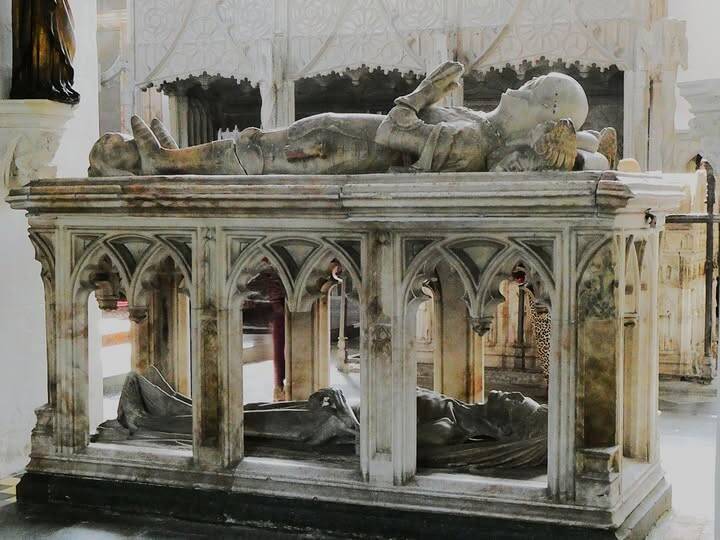
There is no contemporary portrait of John Fitzalan, and he is only recognizable in the Harley Manuscript painting by his heraldic arms. However, there is one further known representation of him, an effigy on his transi monument.
After his death in France, John’s body was buried in the Franciscan church at Beauvais. His younger brother, William, the new Earl of Arundel, commissioned a rare memento mori monument. The phrase translates as ‘remember you must die’ and the monument was designed to remind the living of the vanity of earthly life, and the inevitability of death.
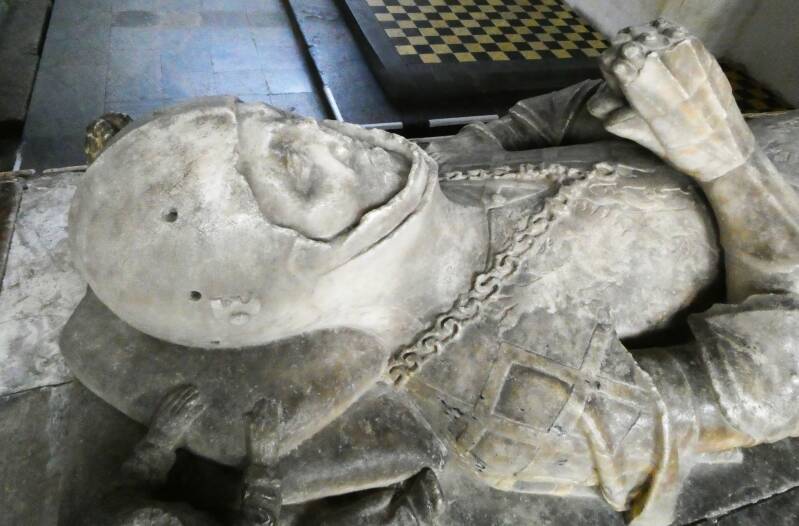
The monument has two levels: the upper carries an alabaster effigy of John in full armour, sleeping peacefully, in the prime of his life. Like most high–status sculptures of the time, it would have been painted in vivid, polychromatic colours, made of ground red cinnabar and blue azurite or lapis mixed with linseed oil. An adhesive called mixtion tinted with red lead for a warmer tone was used to attach gold leaf for highlights, and the finished effect would have been magnificent.
The brilliant colour and glow has worn away over time, but Ai has magically restored the original appearance from traces of paint.

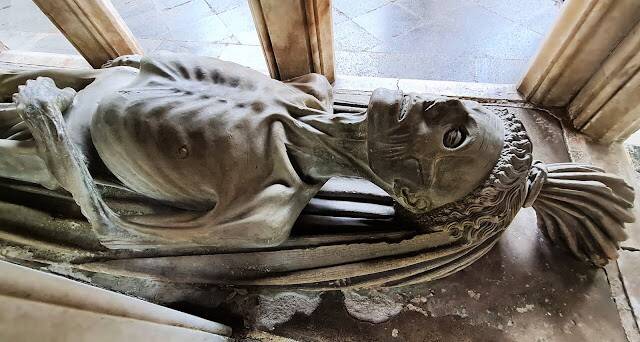
Openings in the lower level reveal a macabre cadaver, carved from limestone, skin stretched taut, jutting ribs and sinews strained, looking more dynamic in death than the upper effigy of John as an idealised knight. The sensitivity of the carving of the emaciated figure, its hand holding the shroud to modestly cover the genitals, suggest it was carved by the same anonymous sculptor of two tombs at Canterbury Cathedral, which indicate John’s monument was carved around 1440. It is said to be the finest example of a sculpted cadaver from 15th century England.
As there were no remains to bury, the monument was an empty cenotaph, not a tomb. However, a vault was constructed under one of the foundation walls, so William must have expected, or hoped, that one day it would receive John’s body. We know that a certain Fulk Eyeton demanded the sum of nearly a thousand pounds to return the bones from France. However, it seems unlikely this transaction took place as in his will, Fulk instructed his descendants to recover the money. Did Fulk return John's remains? There is no record of any formal burial process, so when or how the bones were laid to rest and the cenotaph became a tomb, remains a mystery.
The tomb was completed by 1445. At that time, effigies were not portraits, but idealised representations of a person’s status and piety, and so we can only wonder about the appearance of the brave young man. In my imagination he is the epitome of a noble knight, with strong yet sensitive features, but I am afraid I will never know for sure.
Arundel: swallow, horse or flower?
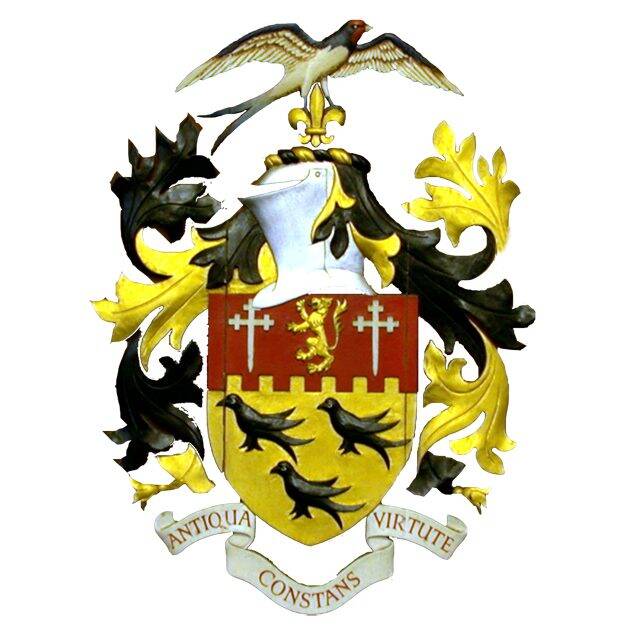
The town of Arundel in the English county of Sussex sits where the Arun River carves its path through the gentle hills of the South Downs to the sea. It is generally assumed that the town gets its name from the river, but in fact, the river was given its name much later than the town.
One myth suggests that Arundel is derived from the French hirondelle, a swallow, but in fact, the town adopted the bird because its name sounded similar. The play on words led to the swallow being adopted as an emblem above the town’s coat of arms.
The three black birds under the swallow are mythical martlets. The flag of Sussex features six gold martlets, representing the ancient Rapes established in Norman times. In 1939, Arundel was granted a formal coat of arms, and adopted the Sussex martlets but reduced the number to three, and changed them from gold to black. This design links the regional pride of Sussex with the town’s own folklore that gave Arundel its local icon.
An even more ancient legend, my personal favourite, tells of the giant, Bevis, who named the town after his horse Hirondelle, Arondelle in Old French. This horse was as tall as a house and astonishingly swift, and together they shared enough adventures to rival an Arthurian romance. Eventually Bevis became the gate-keeper of Arundel castle, where he is remembered for eating a whole ox washed down with two hogsheads of beer every week.
Bevis built a high tower that looked out to the sea, and fell in love with a mermaid. When she spurned his proposal of marriage, he threw his famous sword, Morglai, from the tower and demanded to be buried where it landed, before dying of a broken heart. It is rumoured that Hirondelle died at the same time, and was buried with him.
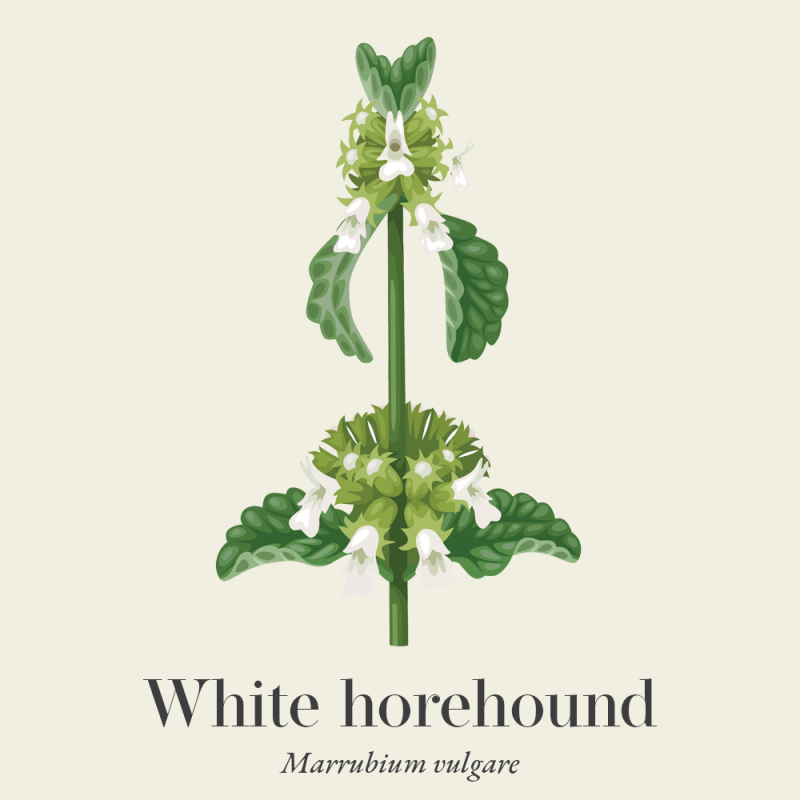
The true origin of the town’s name is nothing so romantic. It is recorded in the Domesday Book as ‘Harundel’, from harhune, a common horehound plant with delicate white flowers, and dell, a small valley. Thus Arundel is the valley of the white horehound.
The herb grew abundantly on the chalky ground of the Downs, and was considered a powerful protector in European folklore, warding off witchcraft and breaking magical spells. It is now increasingly rare, but occasionally clumps can be spotted in the grasslands of Arundel Park, a reminder of the town's namesake.
What did he look like, John Fitzalan, 7th Earl of Arundel?

In all my research, after many inquiries and with the help of the College of Arms, this is the only picture I have discovered to be in existence of John Fizalan, 7th Earl of Arundel, 1408-1435. He was a renowned jouster, and is here bearing the Fitzalan gules lion rampant d'or on his surcoat and horse’s caparison. John's opponent is probably a Mortimer or a member of some other noble Marcher family, wearing azure and gold.
Dressed for a tournament, a knight was encased in steel armour, his face and body completely hidden. It was crucial for the knight’s coat of arms and heraldic colours to be prominently displayed so he could be easily recognised, especially during a chaotic group mêlée, The aim was not to kill an opponent, but to capture them. If colours identified a defeated knight as someone wealthy, he would be less likely to be harmed, but had to surrender his armour and horse, and pay a massive ransom to recover them.
Tournaments were not just for financial gain, they were an opportunity for a knight to win glory, fame, even a beautiful bride. If a knight could not be identified, the heralds in charge of scoring would not be able to attribute points to him, losing him the prize.
As well as being used for identification, the surcoat also served to cover a chainmail hauberk or plate armour during a summer tournament, deflecting the hot sun to protect the knight from heat exhaustion. The caparison was part of a horse’s armour, and was padded to give some protection against arrows. For a horse, a joust was the same as going into battle, with roaring crowds, blaring trumpets and clashing weapons. The animal wore heavy leather or iron barding to protect its head and carried a knight weighing somewhere between 200–300 pounds in full armour, so itself faced serious risk of exhaustion, as well as injury.
Although valuable, unfortunately this depiction of John concealed beneath his armour takes me no further in my quest of discovering his actual appearance. How disappointing!
The picture can be found in the Harley Manuscripts, a collection of over 7,000 medieval manuscripts assembled by Robert Harley (1st Earl of Oxford) and his son Edward Harley in the late 17th and early 18th centuries, now housed in the British Library.
(BL Harley 4205, ff. 36v-37) The original colours are faded and have been enhanced on this posting by Ai for clarity.
Interesting update! I have been informed by Rob Jones, a guide at Goodrich Castle, that John's opponent is one of the Paston family. I don't know when the picture above was actually painted, but it was in 1471 that Elizabeth Paston married a son of Eleanor Fitzalan, forging a connection between the two houses. The Harley Manuscripts collection was not begun until the 17th century, but could this union be the reason these two knights were painted together? It would make more sense than a random pairing - what do you think?
Create Your Own Website With Webador